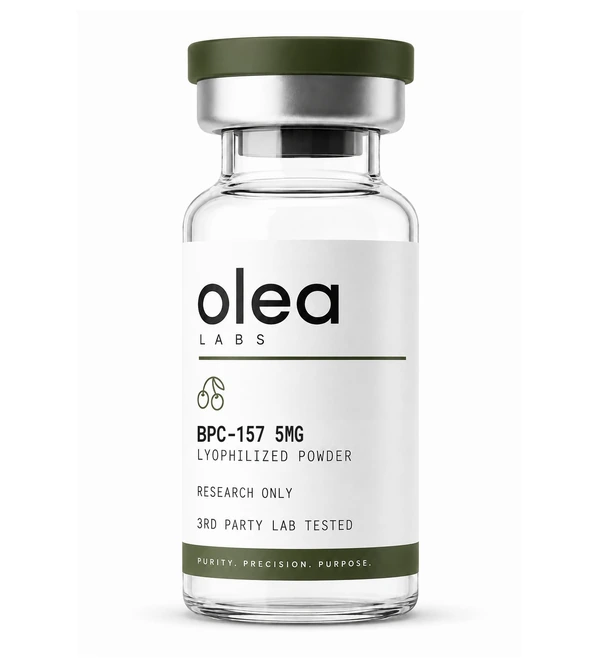
BPC-157 is among the most-studied research peptides in preclinical literature — and the least validated in humans. A clear-eyed look at what the evidence shows and does not show.
BPC-157 occupies an unusual position in peptide research: an enormous preclinical literature, almost entirely from a handful of research groups, and essentially no controlled human trial data. Understanding both halves of that sentence is the correct starting point for any laboratory working with the compound.
Origin and structure
BPC-157 is a synthetic 15-amino-acid peptide (sequence GEPPPGKPADDAGLV) derived from a protective protein isolated from human gastric juice. Unlike most bioactive peptides, it is notably stable in gastric acid and lacks disulfide bridges, which contributes to its unusual enzymatic stability in preclinical models. Its average molecular mass is approximately 1,419.5 Da.
What the preclinical literature reports
Published rodent studies — predominantly from a Croatian research program spanning more than two decades — report effects across a strikingly wide range of models:
- Tendon and ligament injury models: accelerated fibroblast outgrowth and improved biomechanical outcomes
- Gastrointestinal models: protection against NSAID-induced lesions and improved anastomotic healing
- Vascular models: modulation of the nitric-oxide system and counteraction of various hypertensive and thrombotic challenges
- Muscle injury models: improved functional recovery after crush and transection injuries
The mechanistic thread
Across these models, the recurring mechanistic observations involve growth-factor pathway modulation — particularly VEGFR2 expression and angiogenic signaling — and interaction with the nitric-oxide system. A 2025 narrative review in the orthopedic literature described the tendon-healing evidence as the most developed body of work, while noting the field's central limitation: the near-total absence of independent replication outside the originating research groups.
The honest limitations
Verification standards
- HPLC purity ≥98%
- LC-MS confirming the 1,419.5 Da average mass
- Acetate counterion content quantified
- Batch-specific COA with matching vial lot number
Is BPC-157 a naturally occurring peptide?
It is a synthetic fragment modeled on a sequence found in a human gastric juice protein; the isolated 15-mer itself does not occur free in nature.
Why is BPC-157 stable in stomach acid?
Its sequence lacks the bonds most vulnerable to acid hydrolysis and contains no disulfide bridges, giving it unusual gastric stability for a peptide.
Does BPC-157 have proven human benefits?
No controlled human trial data exists. All reported effects are from preclinical animal and in vitro models.