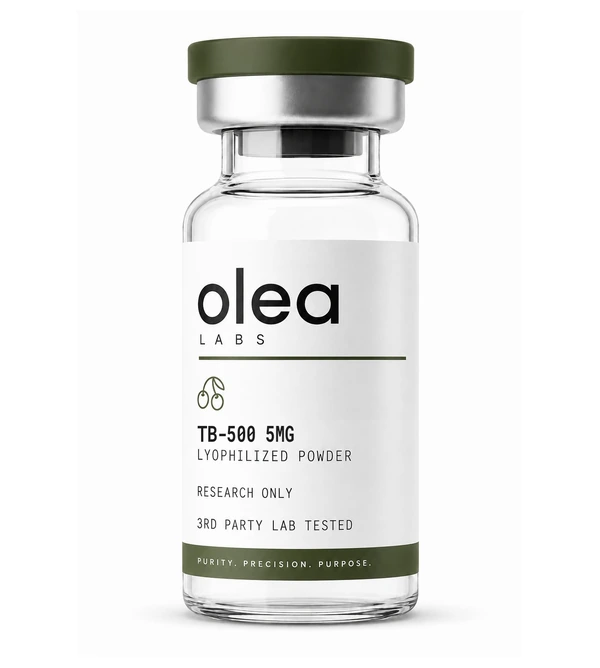
TB-500 is the research-grade fragment of thymosin beta-4, the most abundant actin-binding peptide in human cells. The mechanism and the preclinical evidence, reviewed.
Thymosin beta-4 is one of the most abundant peptides in human cells — a 43-amino-acid actin-sequestering molecule present in virtually every tissue except red blood cells. TB-500 is the synthetic research fragment containing its active actin-binding region, studied in wound-repair, cardiac, and ophthalmic preclinical models.
The actin connection
Actin is the structural protein cells use to move, divide, and change shape. Thymosin beta-4 binds monomeric G-actin and regulates its polymerization into filaments — essentially controlling the supply of building material for the cellular machinery of migration. Because cell migration is the rate-limiting step in wound closure, a peptide that modulates actin dynamics attracted immediate interest from repair-biology researchers.
The preclinical evidence base
- Dermal wound models: accelerated re-epithelialization and angiogenesis in rodent studies
- Cardiac models: reduced infarct size and improved cardiac-cell survival in ischemia-reperfusion experiments
- Corneal models: thymosin beta-4 eye drops progressed furthest toward formal development, with published human trial data for neurotrophic keratitis
- Hair-follicle models: reports of accelerated hair growth in rodent studies via stem-cell migration
TB-500 versus full-length thymosin beta-4
Research suppliers offer the active fragment (TB-500) rather than the full 43-mer primarily for synthesis economy and stability. Published comparative work is limited, and laboratories should not assume dose equivalence between the fragment and the full-length peptide when designing studies from literature that used the complete sequence.
Verification standards
- HPLC purity ≥98%
- LC-MS identity confirmation against the exact sequence supplied
- Counterion content quantified
- Batch-specific COA with lot traceability