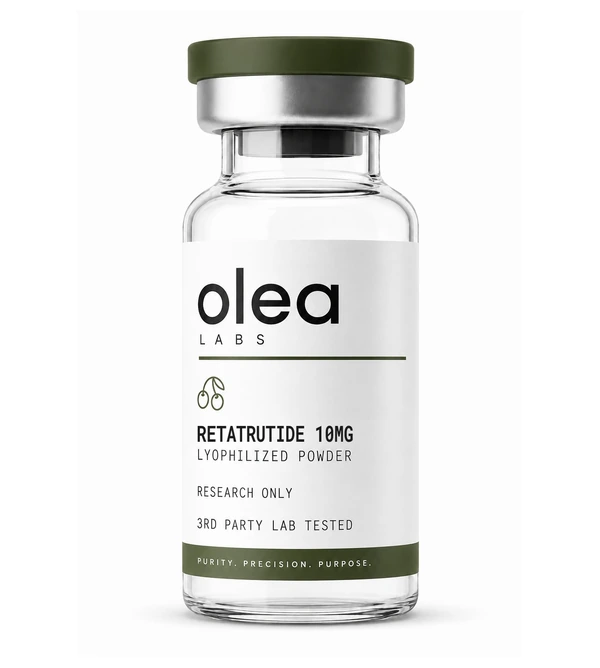
Retatrutide activates three receptors at once — GIP, GLP-1, and glucagon. Here is what the published data actually showed, and what US labs should demand on the COA.
Most incretin-based research compounds pull one lever. Retatrutide pulls three. Developed by Eli Lilly, this single 39-amino-acid peptide activates the GIP receptor, the GLP-1 receptor, and the glucagon receptor simultaneously — a pharmacological profile that made it one of the most discussed molecules in metabolic research after its Phase 2 results were published in the New England Journal of Medicine in 2023.
Why three receptors instead of one
GLP-1 receptor agonism reduces appetite and slows gastric emptying. GIP receptor agonism appears to improve insulin sensitivity and may buffer some of the gastrointestinal effects associated with GLP-1 signaling. The glucagon receptor is the differentiator: glucagon signaling increases hepatic energy expenditure and fat oxidation. In combination, the three pathways attack energy balance from both sides — intake and expenditure — which is why researchers describe retatrutide as an 'energy balance' molecule rather than a pure appetite suppressant.
| Receptor | Primary Research Endpoint | What It Adds |
|---|---|---|
| GLP-1R | Appetite, gastric emptying, insulin secretion | Intake reduction |
| GIPR | Insulin sensitivity, adipose signaling | Metabolic synergy |
| GCGR | Hepatic glucose output, energy expenditure | Expenditure increase |
What the Phase 2 data showed
In the published 48-week Phase 2 trial, participants receiving the highest studied dose (12 mg weekly) lost an average of roughly 24% of body weight — the largest mean reduction reported for any pharmacological agent in a formal obesity trial at the time. Notably, the weight-loss curve had not plateaued at 48 weeks, suggesting a longer treatment horizon than earlier incretin compounds. Liver fat reductions of over 80% were also reported in a substudy, which opened an entirely separate research thread around metabolic-associated steatotic liver disease.
The molecule itself
- 39-amino-acid peptide engineered from a GIP backbone
- C20 fatty diacid side chain for albumin binding and a ~6-day half-life
- Average molecular mass of approximately 4731 Da
- Supplied to laboratories as a lyophilized acetate salt
Sourcing standards for retatrutide
Because retatrutide is in high demand, it is also one of the most commonly under-dosed or mislabeled compounds on the gray market. A legitimate research batch should ship with a lot-specific certificate of analysis showing HPLC purity of 98% or higher, a mass-spec readout confirming the expected molecular weight, and quantified counterion content. If a supplier cannot produce a batch-specific COA with a traceable lot number, treat the material as unverified.
Is retatrutide FDA approved?
No. As of 2026, retatrutide remains an investigational compound in Phase 3 trials. It is available to laboratories strictly as a research chemical.
How is retatrutide different from tirzepatide?
Tirzepatide activates GIP and GLP-1 receptors. Retatrutide adds glucagon receptor agonism, which contributes an energy-expenditure component not present in tirzepatide.
What purity should a research batch show?
≥98% by HPLC with LC-MS mass confirmation, documented per batch on a certificate of analysis.