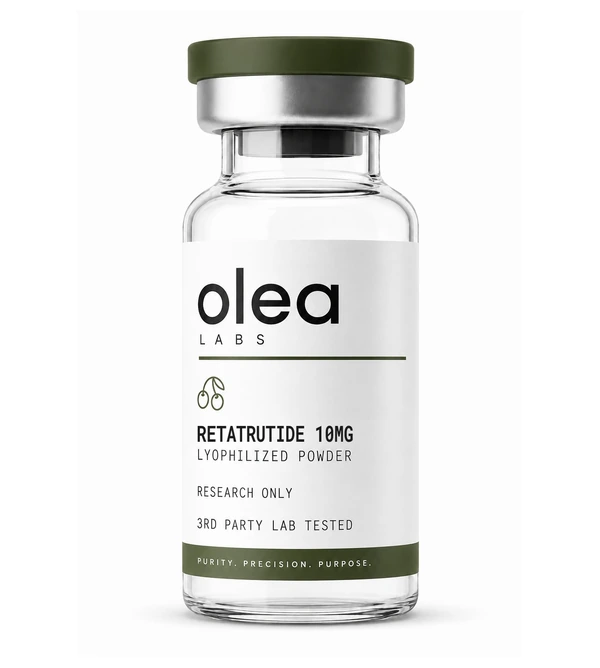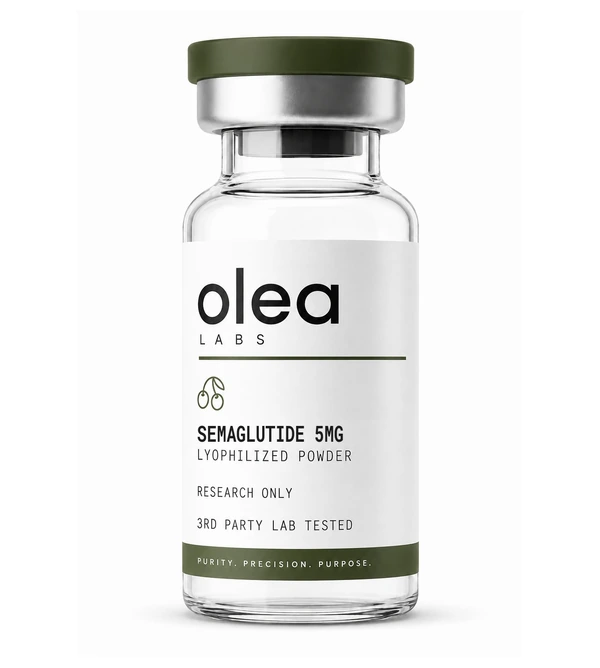
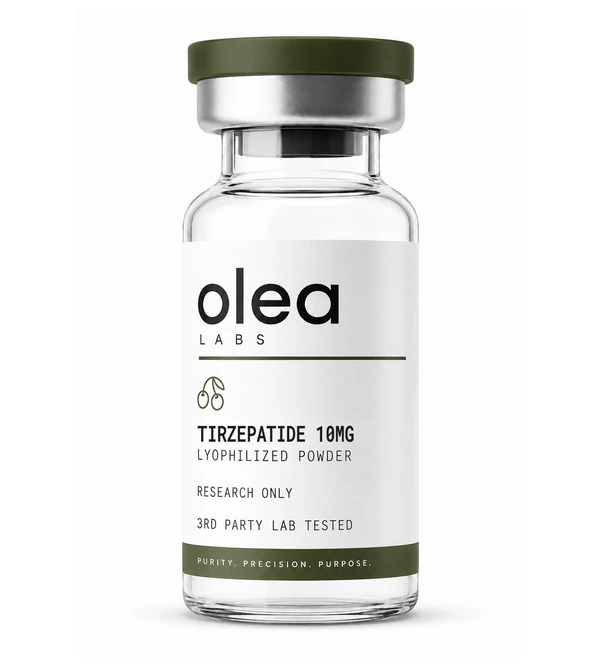
One, two, and three receptors. A side-by-side research comparison of the three most studied incretin peptides — mechanism, published outcomes, and molecular differences.
Semaglutide, tirzepatide, and retatrutide represent three generations of the same idea: engineer an incretin peptide, extend its half-life, and amplify its metabolic effect. Each step added a receptor. Comparing them directly is the fastest way to understand where incretin pharmacology has been — and where Phase 3 pipelines are taking it.
The headline comparison
| Semaglutide | Tirzepatide | Retatrutide | |
|---|---|---|---|
| Receptors | GLP-1 | GIP + GLP-1 | GIP + GLP-1 + Glucagon |
| Amino acids | 31 | 39 | 39 |
| Approx. mass | 4,114 Da | 4,813 Da | 4,731 Da |
| Half-life | ~7 days | ~5 days | ~6 days |
| Best published mean weight loss | ~15% (STEP 1, 68 wks) | ~21% (SURMOUNT-1, 72 wks) | ~24% (Phase 2, 48 wks) |
| Regulatory status (US) | FDA approved | FDA approved | Investigational (Phase 3) |
Semaglutide: the proof of concept
Semaglutide demonstrated that a once-weekly GLP-1 agonist could produce double-digit percentage weight loss in a large, controlled trial population. Its STEP program also generated some of the cleanest long-duration safety data in the class, making it the default reference standard against which every newer incretin is measured.
Tirzepatide: the dual agonist
Tirzepatide added GIP receptor agonism and, in the SURMOUNT program, pushed mean weight loss past 20% at the highest dose. Head-to-head data (SURMOUNT-5) showed tirzepatide outperforming semaglutide on mean weight reduction, establishing the dual-agonist architecture as the new benchmark.
Retatrutide: the triple agonist
Retatrutide's glucagon receptor activity adds an energy-expenditure axis the other two molecules lack. Its Phase 2 weight-loss figures exceeded both predecessors at earlier timepoints, and the dramatic liver-fat reductions observed in substudies have made it a focal compound for metabolic liver-disease research as well.
What this means for laboratory sourcing
All three molecules are fatty-acid-acylated peptides with similar handling requirements: cold-chain storage when lyophilized, protection from repeated freeze-thaw after reconstitution, and verification by HPLC plus mass spectrometry. The practical difference for a lab is documentation quality — the more in-demand the compound, the more aggressively it is counterfeited, and the more a batch-specific COA matters.