One compound presses the accelerator, the other widens the road. The mechanistic logic behind the most-cited growth-hormone secretagogue pairing in research literature.
Growth hormone is released in pulses, governed by two opposing hypothalamic signals: GHRH (which stimulates release) and somatostatin (which suppresses it). A third input arrives from the stomach: ghrelin, acting through the growth-hormone secretagogue receptor (GHSR). CJC-1295 and ipamorelin target the two stimulatory pathways independently — which is precisely why research literature studies them in combination.
CJC-1295: the GHRH analog
CJC-1295 is a modified 29-amino-acid analog of GHRH. Its key substitutions protect against DPP-4 cleavage, and in its DAC (Drug Affinity Complex) form it binds albumin covalently, extending half-life from minutes to roughly a week. Published human pharmacokinetic work on the DAC form documented sustained elevation of GH and IGF-1 levels for days after a single administration — a pharmacologically dramatic effect that also illustrates why the DAC and no-DAC forms are not interchangeable in study design.
Ipamorelin: the selective ghrelin mimetic
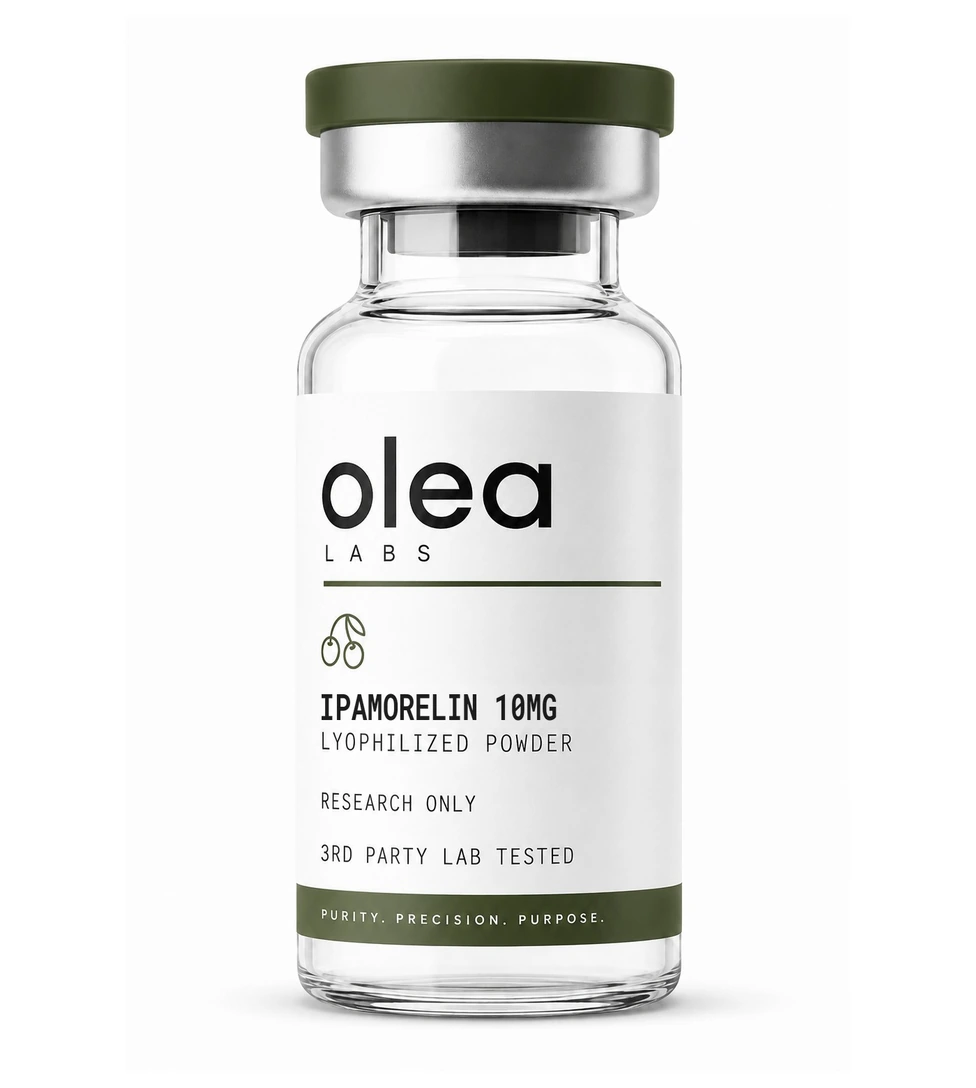
Ipamorelin is a pentapeptide GHSR agonist notable for its selectivity. Earlier secretagogues in its class (GHRP-6, GHRP-2) elevated prolactin, ACTH, and cortisol alongside GH. Published comparative studies report that ipamorelin produces GH release without significant off-target hormonal elevation — a cleaner experimental variable, which is why it became the preferred ghrelin-axis tool compound.
The combination logic
| Compound | Pathway | Release Pattern | Role in Combination |
|---|---|---|---|
| CJC-1295 (no DAC) | GHRH receptor | Short, pulsatile | Drives the pulse |
| CJC-1295 (DAC) | GHRH receptor | Sustained elevation | Raises the baseline |
| Ipamorelin | GHSR (ghrelin receptor) | Short, pulsatile | Amplifies pulse amplitude |
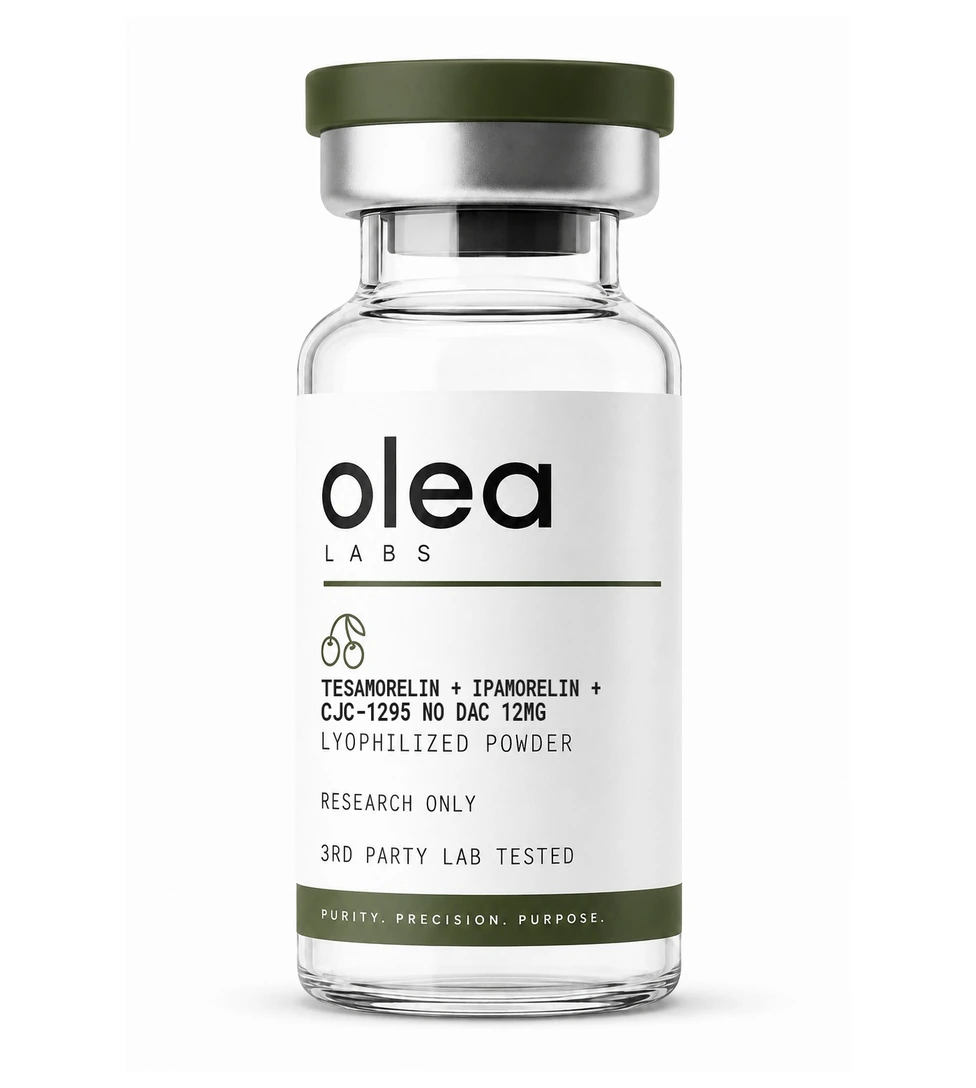
The no-DAC pairing aims to amplify natural pulsatility; published secretagogue research suggests the two receptor systems produce greater GH release together than the sum of either alone, because they converge on the same somatotroph cells through different intracellular pathways. Whether synergy translates to downstream endpoints is a separate, less-settled question.
Verification standards
- HPLC purity ≥98% per compound
- LC-MS identity confirmation (CJC-1295 no-DAC ≈ 3,648 Da; ipamorelin ≈ 711.9 Da)
- DAC and no-DAC forms clearly distinguished on label and COA
- Separate COAs per component for combination products
What is the difference between CJC-1295 with DAC and without DAC?
The DAC form binds albumin and produces sustained, week-long GH elevation. The no-DAC form (also called Mod GRF 1-29) is short-acting and pulsatile. They are pharmacologically distinct.
Why is ipamorelin preferred over GHRP-6 in research?
Published studies show ipamorelin releases GH without the prolactin and cortisol elevation seen with earlier ghrelin-mimetic peptides, making it a cleaner experimental tool.